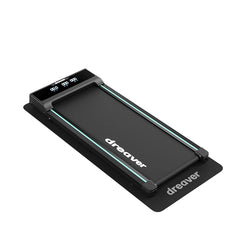
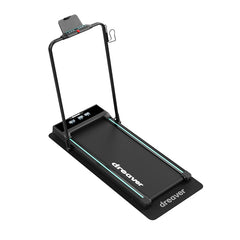
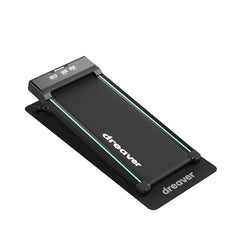
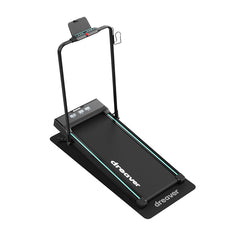
It is a familiar story for many: the first few weeks of eating healthier or exercising more are easy. After that, it becomes increasingly difficult to keep going. Why is that? Is it simply a matter of discipline, willpower, or perseverance? Or is there more to it? The truth is that there is a whole science behind maintaining healthy habits that is rarely discussed. That is strange, because maintaining consistency is the biggest challenge in the overall picture of lasting behavioral change. In this article, you will learn more about what you can apply immediately to maintain your healthy (exercise) habits. You will get practical tips, and to make it immediately applicable, maintaining consistency in using your Dreaver treadmill will be the central focus.
How behavioral change begins
You have probably read countless times that changing habits is complicated. Yet, you always see the following three steps recur in how building healthy habits begins. This suddenly makes it clear.
Step 1: Identify unwanted habits. Example: doomscrolling after breakfast.
Step 2: Define the desired behavior (if-then planning). Example: "If I have finished breakfast, then I will immediately walk on my Dreaver Motion Pro for 10 minutes."
Step 3: Apply it (take action). Walk on your Dreaver.
Actually continuing to take action… That is the challenge. Especially when you use a treadmill at home, it helps to make walking a regular part of your daily routine. Below you will find 10 tips that will support you in continuing to walk on your Dreaver treadmill.
Tip 1: Maintain a realistic plan
Maintaining habits starts with checking whether your plan is achievable. Suppose your intention is to stand on your Dreaver treadmill for 90 minutes 7 days a week; I immediately admire the enthusiasm with which you start. At the same time, there is very little room for flexibility, because what if one day it doesn't work out to walk? How will you deal with this?
When you set the bar extremely high for yourself, it can lead to disappointment when you realize it is not sustainable. In practice, we often blame ourselves, while the design of our plan may need some adjustments.
That is why the advice is: keep checking whether your plan is realistic and adjust it where necessary, so that you continue to experience enough moments of success.
Tip 2: Keep exercise appealing
As you have read earlier, it is common to want to replace an unwanted or unhealthy habit with a desired or healthy one. It can take quite a bit of mental energy to maintain this. You can therefore make your healthy exercise habit—for example, walking on your Dreaver treadmill—quite appealing.
You can do this, for example, by combining walking with listening to a podcast, enjoyable music, or watching a series. Furthermore, you can make it more appealing by choosing a time of day yourself when walking works well. Rewarding yourself with a cool sports outfit when you have maintained your habit for a certain period can also help.
Tip 3: Use if-then plans
Sooner or later, you will undoubtedly encounter certain obstacles when it comes to exercising consistently. You may have many ideas in your head about how to tackle these obstacles, but ultimately nothing changes. This is not strange at all; most likely you simply lack concreteness. If-then plans are an excellent solution for this. If-then plans work as follows: If X happens, then I will do Y. The concept is very powerful because you think very concretely in advance about what you are going to do. You can use if-then plans for situations, obstacles, or times of day, for example.
Situation: "If I am finished with breakfast, then I will immediately step on the treadmill."
Obstacles: "If I don't feel like walking, then I will put on my favorite music to motivate myself."
Times of day: "If it is 7:30, then I will walk on the treadmill for 15 minutes."
Tip 4: Vary your exercise habits
Introducing variety into your Dreaver routine makes it easier to maintain, and here is how it works.
Variety itself is rewarding and can contribute to more dopamine production in your brain. Variety is therefore pleasant for your brain, and this stimulation can help you stay more focused on the habit you want to change and/or maintain—in this case, your exercise routine.
Examples of variety while walking on your treadmill: combining walking with listening to music/a podcast, calling a friend, watching a series/movie, or having no distractions at all. Varying also means walking at different times of day and alternating between indoors and outdoors.
Tip 5: Ensure social support
Your social environment is extremely important when it comes to maintaining healthy habits. Those close to you can support you, but they can also (unconsciously) make it harder to maintain your exercise habits. Good communication with your social environment is therefore of great importance, as is recognizing that there are different types of support. Social support can look like this, for example:
- Communicating with your partner that your exercise time is immediately after breakfast, so it is clear that you are temporarily unavailable for other things at that time.
- Sharing with someone in your social environment what moments might be difficult for you when it comes to maintaining your healthy exercise habits. Being able to talk openly about this can already help.
- Discussing with your partner where a good place to store the Dreaver treadmill between exercise sessions might be, so that you can quickly take it out again.
Tip 6: Store your treadmill in a convenient place
Storing your treadmill in a convenient place makes it much easier to use. When you can have it ready to start within two minutes, it lowers the barrier. Imagine that you first need 10 minutes to set up the treadmill and prepare the space; that takes quite a bit of mental energy. When you are mentally tired, a convenient place for your treadmill can make the difference between walking or not walking.
Tip 7: Keep it achievable and challenging
You do not feel equally energetic, happy, and motivated every day. This has everything to do with the relationship between load and capacity.
Load = "Everything that comes at you and costs energy, such as work, worries, or stress."
Capacity = "How much you can handle at that moment; if there is more on your plate than you can handle, you become overloaded."
This means that you want to learn to distinguish between good days and less good days and adjust your load accordingly.
Good days: you can handle a lot, and the tough tasks or assignments go well for you.
Less good days: you do not feel optimal, but you notice that—despite it being difficult—you manage to persevere.
Bad days: you have a tendency to push yourself, but that is not wise (in reality, you need rest).
Getting stuck: Tendency to look for a quick fix, which is why a restart plan works—one you have thought about in advance. Example of a restart plan: "If I get stuck in achieving my exercise goals, then I will start by walking for 20 minutes twice a week and build up from there."
The following questions can help you make it practical:
- In which situations is it wise for you to push yourself to work on your exercise goals, despite perhaps not feeling like it?
- In which situations is it wise for you to be more lenient with your exercise routine?
- Suppose you get stuck in pursuing your exercise goals in the future. What is the first achievable step you can take to get back on track?
Tip 8: Do the motivation check-in
Checking in from time to time about where your motivation comes from can help you maintain healthy exercise habits. There are different types of motivation for doing something. This applies not only to exercise, but practically to all the habits you have.
Below you will see the different types of motivation.
- Type 1 motivation: You do something because you enjoy it and you enjoy it. Example: "I exercise regularly because I enjoy it and find it pleasant."
- Type 2 motivation: You do something because you think it is important. Example: "I walk regularly on my Dreaver treadmill because I think it is important for my health."
- Type 3 motivation: You do something as a condition of being okay with yourself. Example: "If I do not exercise, then I feel guilty."
- Type 4 motivation: You do something to meet external pressure or for the reward you receive. Example: "I exercise regularly because I feel pressure from my environment."
Types 1 & 2 motivation increase the chances of sustainable and lasting change. Do you recognize yourself in this? Keep going!
Types 3 & 4 motivation predict difficulties around maintaining your habit healthily. Do you recognize yourself in this? Try to investigate where it comes from, and the advice is to do something about it.
*Note: you may recognize yourself in multiple types of motivation. This is completely normal.
Tip 9: Do this for more willpower
Being able to focus (especially during difficult moments) contributes to perseverance. Focusing—keeping your attention on something—is important for willpower. You do not want to build your plan on willpower, but you do sometimes need it.
Willpower is the ability to choose behavior that fits what is important to you: by doing what is necessary and leaving what holds you back, even when that is difficult.
You may be thinking now: how exactly do I use willpower? The joke is: you are already doing it without being aware of it. When your alarm goes off and you get out of bed while you would rather stay in bed, then you are using willpower. Or when you let someone finish talking while you would rather respond immediately, then it happens too: you are using willpower.
So let us not make it more complicated than necessary for now. You do not need to train your willpower separately for now.
What you can do is make sure that you can stay focused. What can strengthen your focus:
- Enough exercise (can be indoors, can be outdoors)
- Dealing with stress (a little stress is healthy, too much/too long is risky)
- Healthy sleep duration and sleep quality (a good night's sleep makes everything easier)
- Avoid multitasking (a lack of overview severely limits your attention)
Tip 10: Reward yourself
Who wouldn't be happy with a reward now and then? You can use it as a tool to maintain healthy exercise habits. There is much discussion about whether or not rewarding is wise to use when changing behavior. The truth probably lies somewhere in the middle. Suppose you want to break the habit of automatically treating yourself to a beer or a glass of wine after a busy day at work; then it is unwise to reward yourself after changing the habit with… a beer or a glass of wine. When you have achieved your exercise goals for a month and buy yourself a new sports outfit as a reward, that sounds much better. Rewarding can be wise, if it is appropriate given the situation.