You bought a walking pad with the best of intentions. It seemed like the perfect way to finally get your daily steps in while working from home. In the beginning, you walked miles every day during boring meetings or while answering emails. It felt great. Yet, after a few weeks, you notice that the device spends more time under the couch than you do on it. Taking it out each time starts to feel like a chore. Before you know it, your new favorite gadget has turned into an expensive dust collector. This is a well-known phenomenon, and it has nothing to do with a lack of motivation. Stowing away your equipment unconsciously sabotages your good intentions. In this article, you will learn how the psychology of friction works and how to make sure you start using your walking pad regularly again.
The psychology of friction and habits
Our brains are hardwired to conserve energy. When we try to build a new habit, the path of least resistance is always the most appealing. Psychologists call obstacles that keep us from achieving our goals friction.
The more friction there is, the less likely you are to actually take action. You want to walk, but first you have to move the couch, pull the device out from under the bed, plug it in, and set your desk to the right height. Every extra step reduces the likelihood that you will actually do it.
Every hurdle reduces the chance of success
All those little actions together create a significant mental hurdle. On a busy workday when you are already tired, your brain immediately chooses the easiest option: staying seated. It is not that you do not want to walk. The process of getting started has simply become too tedious.
That distinction is important. Motivation is rarely the problem. The environment is the problem.
What we can learn from other exercise equipment
We have seen this pattern for decades with almost all home exercise equipment. Think of the classic exercise bike or rowing machine. Bought with good intentions, but because the equipment takes up space, it slowly disappears into the corner of the bedroom.
Next, a sweater ends up over the handlebars. A day later, a jacket is draped over it. Within a month, the exercise equipment has turned into the most expensive clothes rack in the house. As soon as the equipment is stored away, the visual cue to exercise disappears too. Seeing walking makes you want to walk. But if the equipment is out of sight, you simply stop thinking about it.
Create frictionless accessibility
The solution is surprisingly simple: remove all obstacles between you and your goal.
Leave the walking pad where you use it. Do you have a standing desk? Then leave the treadmill under it as standard. Make sure the plug is always in the socket. The only step you still need to take is pressing the button.
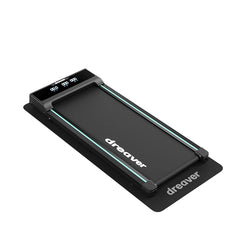
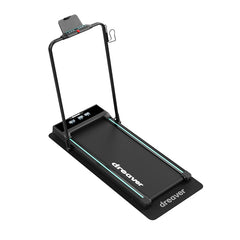
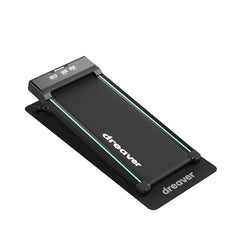
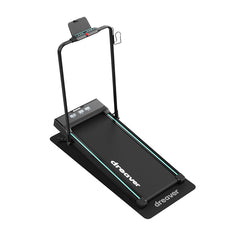
Place the treadmill on a treadmill protection mat. This protects your floor, dampens the noise, and provides a stable surface. An additional benefit: the whole setup looks like a permanent workspace, not a temporary arrangement that you quickly move away.
When the equipment is always ready to use, the step to walk for ten minutes during a phone call is incredibly small. Those small, frictionless moments eventually build the consistent habit you are looking for.
Make walking the easiest choice
You have invested in your health. Make sure your environment supports that investment. Stop hiding your equipment under furniture or in closets. Accept that the equipment is a visible and permanent part of your workspace.
Try it for the coming week: leave everything where it is. See what this does to the number of steps you take every day. There is a good chance you will spontaneously walk for a few minutes much more often, simply because the hurdle is no longer there.
Want to buy a treadmill? View Dreaver's full range and have it delivered to your home quickly.