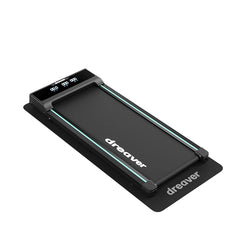
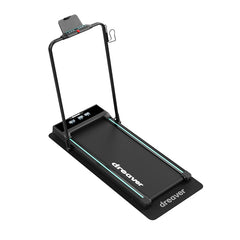
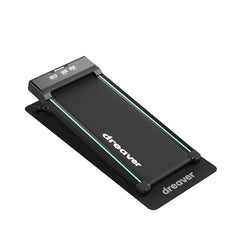
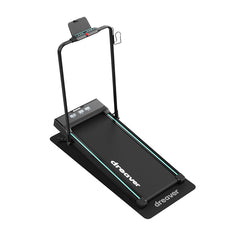
You are ready to work on an important project. You open your document, type the first sentence, and then a familiar sound rings out. A red dot appears on your taskbar. Someone has sent you a message via Slack or Microsoft Teams. The temptation to take a quick look is enormous. Before you know it, half an hour has passed, you have had three conversations, and you are completely out of concentration. Digital distraction is one of the biggest obstacles for modern professionals. Software such as Slack and Teams keeps us connected, but at the same time fragments our attention. We look for solutions: software blockers, time management systems, focus modes. Yet a surprisingly effective solution is not found in your software settings, but under your desk. A walking pad offers a practical way to organize your workday differently. Light, rhythmic movement can have a direct impact on how your brain deals with distractions. By walking during your work, you create a mental buffer against the constant stream of notifications.
The fight against cognitive noise
When you sit still behind a desk, your brain often has residual energy. This phenomenon is known as cognitive noise. Your brain unconsciously looks for new stimuli to get rid of that energy. An incoming message via Teams feels like a welcome change at such a moment. This can provide a quick burst of dopamine, which can sustain the desire for more notifications.
So the problem is not in your discipline, but in your environment. Sitting still is naturally a passive state. Your body is inactive, but your brain is not. That combination makes you vulnerable to any stimulus that comes along.
Light movement as a lightning rod
As soon as you step on a walking pad and set a steady pace, you can give your body just enough to do to absorb that cognitive noise. Walking requires a little bit of unconscious attention to balance and rhythm. Because of this, there is simply less mental space left to stare longingly at your Slack icon.
Your brain is sufficiently occupied, which may reduce the urge to constantly refresh your inbox. Not only through willpower, but possibly also through physiology.
How rhythmic movement protects your focus
Focus requires a certain state of mental flow. Sitting still sometimes works against that flow, because you are more likely to click back and forth between tabs. Moving can put you in a physical rhythm that can translate into mental calm.
Research on the relationship between movement and cognition indicates that light aerobic activity can activate the prefrontal cortex. That is exactly the part of your brain that is responsible for planning, decision-making, and suppressing distractions. So you are possibly training not only your fitness, but also your concentration.
Deep work and walking: a logical combination
Deep work, working with uninterrupted attention on a complex task, goes surprisingly well with walking. The constant movement of your legs acts as an anchor for your attention. Many people experience that they have less need to multitask while walking.
Typing or reading can go more smoothly, the threshold to interrupt your work for a chat message can become higher. You are literally and figuratively in forward motion, which makes it easier to stay with your current task.
Want to use this structurally? Consciously schedule your most demanding work during your walking sessions. Writing, analyzing, strategic thinking: these are tasks that go well with a steady walking pace of 2 to 4 kilometers per hour.
Task completion and a better workflow
Another benefit is the influence on task completion. Completing a project component requires perseverance, especially when the work gets difficult for a moment. When facing resistance, we quickly reach for communication tools as an escape route.
Walking can help you work through those moments of friction. The physical action gives you a sense of momentum. Overthinking problems while walking feels more natural than sitting still and staring at a blinking cursor. You find answers to complex issues faster, without having to immediately approach a colleague via Slack.
Getting started practically: what to pay attention to?
Purchasing a walking pad is just the beginning. The setup of your workspace partly determines how effectively you use the device.
Ensure a stable setup. Your desk must be at the right height so you can type comfortably while walking. A height-adjustable desk is ideal for this. Place your walking pad on a treadmill protection mat to reduce noise pollution and protect the floor, especially on hard surfaces such as parquet or laminate.
Start slowly. A pace of 2 kilometers per hour is already sufficient for most people to experience the benefits without typing or reading suffering. Build that up slowly over the first week.
Plan your walking sessions in advance. Link them to specific tasks, not to a time. This way you can condition yourself: over time, starting up can become a signal for your brain to focus.
Walk yourself to a better workday
Integrating a walking pad into your daily routine requires a small adjustment, but the benefits for concentration and productivity can be substantial. You change your workplace from a passive environment full of digital pitfalls to an active zone for focused attention.
Are you ready to structurally reduce the constant interruptions from Slack and Teams? View the range to order a treadmill at Dreaver, and experience for yourself how powerful the combination of movement and focus can be.