Everyone knows the phenomenon of New Year's resolutions. In January, you go to the gym full of good intentions, ready to get really fit this year. The first few weeks go fantastically. You have energy, you feel strong, and you go at least three times a week. But then February arrives. It rains, you're busy at work, and before you know it, you haven't gone for two weeks. Enthusiasm fades and the routine becomes diluted. This is an extremely recognizable pattern. The problem is rarely a lack of willpower. Often, it's simply a lack of clear structure and immediate feedback. People often try to train based on what feels good at the moment. Although that sounds intuitive, in practice it often leads to aimlessly walking around the gym or repeatedly doing the same three exercises. You see no progress, boredom sets in, and motivation disappears. A training app offers a practical solution to this. It is much more than just a digital notebook; it is a tool designed based on sound behavioral psychology. By providing structure, setting small goals, and making your progress visible, an app can help you make exercise a lasting habit.
The trap of training by feel
When you go to exercise without a plan, your brain has to constantly make choices. Which muscle group am I going to train? How many repetitions should I do? What weight is suitable? This constant decision-making costs mental energy. Especially after a long day at work, you often no longer have the capacity for it. The result is that you choose the path of least resistance. You do what is easy or you skip the workout altogether.
Training without a plan also makes it impossible to objectively measure your progress. Your muscles get used to a certain load and need new stimuli to get stronger. Without a logbook, you quickly forget what weight you used last week, causing you to plateau. And standing still is one of the biggest motivation killers there is.
Behavioral psychology: How an app helps your brain
Behavioral change is difficult, but a good app makes smart use of psychological principles to facilitate the process. It takes the thinking out of it and rewards you for your effort.
Structure and predictability
An app gives you a clear, pre-planned program. You no longer have to think about what you are going to do; you open the application and you immediately see your workout for the day. This structure greatly lowers the threshold to get started. You just have to follow the instructions.
Small goals and immediate reward
Big goals, such as losing weight or running a marathon, are often intimidating and far in the future. An app breaks this down into small, manageable micro-goals. Completing a single workout, checking off an exercise, or breaking a personal record on one machine gives you an immediate sense of satisfaction. Every time you check something off, your brain can produce a little bit of dopamine. This happiness hormone can make you want to repeat that behavior more often in the future.
Visual progress
People are visual. We want to see that our efforts yield results. Apps make your hard work visible through charts, statistics, and overviews. Even on days when you don't see a difference in the mirror, the data tells you that you have indeed become stronger, faster, or fitter. This visual evidence can be important to stay motivated during slumps.
What exactly does such an app do for you?
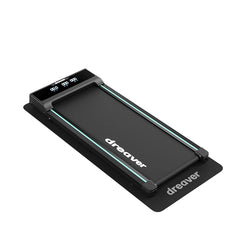
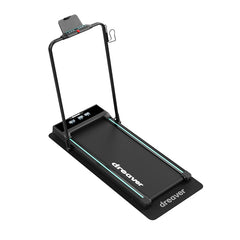
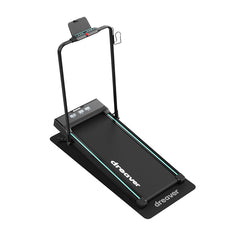
To really understand why it works, it is useful to look at the specific features that a modern training app offers, especially if you, for example, train with a home treadmill. It is like a personal trainer that simply fits in your pants pocket.
Firstly, these apps offer complete, personalized training plans. Whether you want to build muscle mass, lose weight, or simply get fitter, the app generates a plan that suits your level and available time. You get to see exactly which exercises you need to do, including the number of sets, repetitions, and the required rest time.
In addition, most apps contain an extensive library of instructional videos. Not sure how to perform a 'Romanian Deadlift' or a 'Bulgarian Split Squat'? With one click, you can see the correct technique. This can help prevent injuries and gives you the confidence to try out new machines and exercises in the gym.
Finally, the reminders and notifications act as a friendly nudge. They remind you of your planned workouts and celebrate your successes when you have reached a certain milestone (such as exercising three times a week for a month). This interaction provides just that little bit of extra support on days when the couch looks more attractive than the gym.
Make exercise a lasting habit
Building a new routine takes time and consistency. By leaning on technology, you can make that process considerably easier. An app removes the doubt, makes your progress measurable, and celebrates your small victories. Let go of the guesswork and give your training direction. Download an app that suits your goals, start with a simple plan, and let the structure do the heavy lifting. Before you know it, exercise is no longer an obligation, but a logical and established part of your weekly routine.