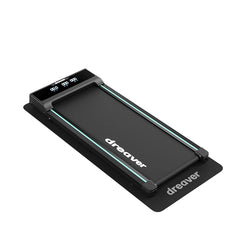
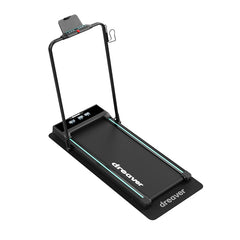
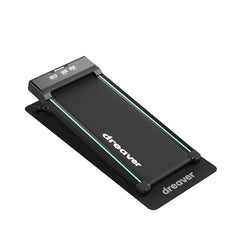
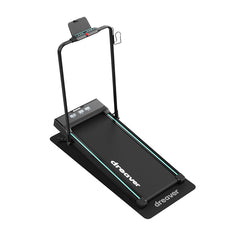
You have your eye on a walking pad, or perhaps it is already in the box, but now you are faced with a practical question: what do you do if your floor is covered with carpet or other floor covering? The answer is not simply yes or no. The surface on which you place a walking pad directly affects the stability of the device, the motor's ventilation, and the noise level during use. In this article, we explain exactly what you can expect when using a walking pad on carpet, what the risks are, and how you can easily minimize them. This way, you can get started with peace of mind, regardless of your floor type.
Why the surface matters
A walking pad treadmill is compact and lightweight, but it is still an electrical device with moving parts. The surface it stands on largely determines how well the device functions.
Three factors play a role:
Stability
An unstable surface can cause the device to wobble or shift during use, which is both unsafe and frustrating.
Ventilation
Most walking pads have a motor that needs air to cool down. If the ventilation openings on the bottom are blocked by a thick layer of floor covering, the motor can overheat more quickly.
Noise and vibrations
A hard floor transmits vibrations directly to the rest of the room. Carpet, on the other hand, absorbs some of those vibrations, which can make use quieter.
The benefits of carpet as a surface
Surprisingly, carpet offers a number of advantages over a hard floor.
Less noise and vibration
Anyone who uses a walking pad in an apartment or on an upper floor knows how quickly noise travels. Carpet dampens vibrations before they reach the floor. This makes the device noticeably quieter, which is pleasant for you, but also for neighbors or housemates.
Extra grip and stability
Low-pile or sturdy carpet gives the device a good grip. The feet of the walking pad can almost anchor themselves in the floor covering, making the chance of shifting smaller than on a smooth wooden floor or tiles.
More comfort underfoot
Carpet naturally has a slight cushioning effect. Combined with walking on a walking pad, this can slightly reduce the strain on your joints — a small but welcome benefit during longer walking sessions.
The disadvantages and risks
Not every carpet is suitable. There are situations in which floor covering can actually cause problems.
Reduced air circulation
With thick or high-pile carpet, the ventilation openings on the bottom of the device can become (partially) blocked. This restricts the airflow to the motor, causing the device to get hotter than intended. In the long term, this can lead to motor wear or failure.
Instability on high-pile carpet
A soft, thick carpet is not a sturdy base. The device can sink slightly or wobble during use, especially if you maintain a higher pace. This creates an unpleasant feeling and increases the chance of tripping.
Wear on the floor covering
The constant pressure and movement of a walking pad can leave marks in soft carpet over time. Think of a depressed area or slight damage to the fibers.
Practical tips for safe use on carpet
Fortunately, most disadvantages can be easily minimized. With a few small adjustments, you can use your walking pad safely and effectively, even on floor covering.
Use a protective mat
A flat, sturdy mat under the device, also known as an equipment mat or anti-vibration mat, solves several problems at once. It protects the floor covering from wear, provides a more stable surface, and keeps the ventilation openings free of carpet fibers.
When choosing a mat, pay attention to the thickness: too thick is also not ideal, because it makes the surface less stable. A thin, sturdy rubber mat works best.
Check the stability before use
Always place the device down gently first and check that it is standing properly before you start walking. Does it wobble? Then adjust the position or lay the mat down again. A few extra seconds of effort can prevent a lot of inconvenience.
Ensure sufficient ventilation space
Always check that the ventilation openings on the bottom are clear. With a good mat under the device and a smooth underside, this is rarely a problem, but it is still smart to check this regularly, especially if you use the device on thicker carpet.
Preferably choose low-pile carpet
Do you have a choice? Then low-pile carpet or sturdy floor covering is the best option. It provides sufficient grip and cushioning without compromising ventilation.
Dreaver walking pads: designed for home use
Dreaver treadmills are specifically designed for use in the home, such as in living rooms and home offices that often have floor covering. Thanks to the compact design and stable feet, the Dreaver Motion Pro can be used on various floor types, provided it is placed correctly. For those who add extra weight or intensity, the Dreaver Elevate One and the Dreaver Climb One also provide a solid base on carpet, provided an underlay mat is used.
When using a treadmill on carpet, it is advisable to use a suitable underlay mat. This ensures that the Dreaver Assist One always stands stably, which is essential for the safety and support this model offers. This way, the floor is protected and the device will last longer.
How to use your walking pad with confidence
Using a walking pad on carpet is perfectly fine as long as you take the nature of your floor covering into account and take a few simple precautions. The combination of a good underlay mat, sufficient ventilation space, and a stable setup is more than enough in most cases.
If in doubt about the suitability of the floor or for advice on which model is the best fit, Dreaver is happy to help. The Dreaver Elevate Pro, for example, is a good choice for those who have the highest demands for comfort and power, even indoors on floor covering. View the full range and find the treadmill that suits your living situation.