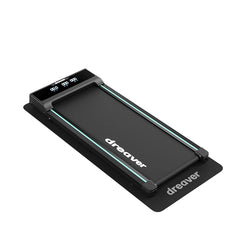
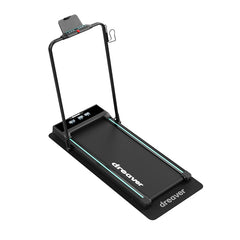
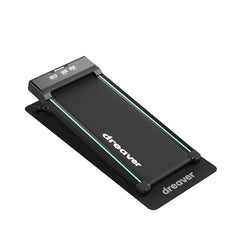
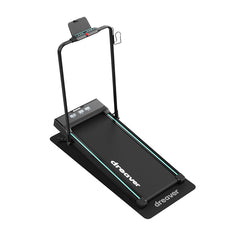
Many people who want to lose weight start with every good intention. A new diet, a gym membership, up early every morning. After a few weeks, enthusiasm often wanes because the plan doesn't fit into a normal week with work, family, and appointments. Having a treadmill at home makes exercising much easier, but the treadmill alone won't do the work. In this article, you'll learn how weight loss actually works, how much energy you burn on a treadmill, how to build up your training smartly, and what role nutrition, sleep, and habits play. This way, you'll know what you can realistically expect and how to stick with it.
How weight loss actually works
Anyone who wants to lose weight will soon come across conflicting advice. Yet the basics are quite simple. Then it gets interesting, because the body is not a calculator.
The energy balance in brief
Your body uses energy every day. A large part is used for processes you don't think about, such as breathing, your heartbeat, and keeping your body warm. This is where the energy comes from that you use by moving and digesting food.
If you take in less energy through food than you use, your body taps into its reserves. That is the core of weight loss. One kilo of body fat contains about 7,000 kilocalories. Someone who takes in about 300 to 500 kilocalories less than they use every day will gradually lose weight, about a quarter to half a kilo per week.
Why moving more does more than burn calories
Moving increases your expenditure, but it does more than that. Walking regularly helps maintain your muscle mass while you lose weight. That is important, because muscles also use energy at rest. In addition, exercise has a positive effect on your blood sugar level, your sleep, and your mood. People who feel better often also find it easier to make healthy food choices.
In short: weight loss is about a small, sustainable energy deficit. Exercise helps with this, and at the same time makes you feel fitter.
How much energy do you use on a treadmill?
How much energy you use depends on your body weight, your pace, the duration of the workout, and whether you are walking on an incline. A heavier body uses more energy at the same exertion level, because more weight is set in motion.
The table below gives an idea of the expenditure per half hour. These are estimates. Your actual expenditure may be higher or lower.
|
Body weight |
Walking, 5 km/h |
Walking on an incline, 5 km/h |
Jogging, 8 km/h |
|---|---|---|---|
|
60 kilos |
about 105 kcal |
about 180 kcal |
about 240 kcal |
|
75 kilos |
about 130 kcal |
about 225 kcal |
about 300 kcal |
|
90 kilos |
about 160 kcal |
about 270 kcal |
about 360 kcal |
A half-hour walk may therefore seem to yield little. The difference lies in the cumulative effect. Someone who walks for an hour five days a week will soon burn an extra 1,300 to 1,600 kilocalories. Over a month, that is roughly the energy of one kilo of body fat, without you having to change anything about your diet.
Keep in mind, however, that the display on a treadmill or smartwatch provides an estimate. Use those figures mainly to track your own progress, not as an exact measurement.
Why walking is so effective for losing weight
Running burns more energy per minute than walking. Yet walking is the better choice for many people who want to lose weight. There are a few reasons for this.
You can stick with it longer and more often
You cannot do a strenuous workout every day. Your body needs time to recover, and the threshold for getting started is higher. You can walk almost every day, even on days when you are tired. It is precisely that consistency that makes the difference in the long term.
Low impact on your joints
When overweight, ankles, knees, and hips endure a lot during running. When walking, one foot always remains on the ground, and the impact per step is much smaller. A well-cushioned walking surface makes it even more pleasant. This reduces the risk of injury and means you need to take breaks less often.
Less chance of overcompensating
After a strenuous workout, some people get very hungry or reward themselves with something tasty. This quickly undoes some of the calories burned. Brisk walking has this effect to a lesser extent for most people. You exercise without your appetite increasing significantly.
It fits into your day
A treadmill at home does not have to wait for a free hour. You can walk while watching the news, on a phone call, or while reading emails at a standing desk. This way, you accumulate exercise without taking up extra time.
How to get more out of your treadmill workouts
A few smart choices make your workout more effective without feeling harder than necessary.
Choose consistency over intensity
Walking for forty-five minutes five times a week yields more than one exhausting workout per week. Therefore, focus mainly on the total number of minutes per week. A good goal to work towards is 200 to 300 minutes of exercise per week. That sounds like a lot, but it comes down to about forty-five minutes a day.
Vary the pace
A steady pace is fine, but speeding up occasionally gives your workout an extra boost. For example, walk for four minutes at your normal pace and then walk as fast as you can for one minute. Repeat this six times. This way, you increase your expenditure and train your fitness at the same time.
Add an incline occasionally
Walking on an incline demands more from your leg muscles and your heart, while your pace remains the same. Even a small incline of three to five percent makes a difference. A model like the Dreaver Elevate Pro has an automatically adjustable incline, allowing you to change it while walking without stepping off. Build up the incline gradually, however, so your calves and Achilles tendons can get used to it.
Walk during work
Remote workers often sit still for hours. Someone who walks at a gentle pace of 2 to 4 kilometers per hour for part of that time burns extra energy without much effort. An hour of gentle walking per workday can quickly add up to several hundred kilocalories over a week. In addition, your body feels less stiff at the end of the day.
Pay attention to your posture
Walk upright, with relaxed shoulders and your gaze forward. Let your arms move freely. Do not hang on the handrail, because then you take the work away from your legs and torso and use less energy.
A build-up schedule for the first eight weeks
Getting started is often the hardest part. The schedule below helps you get started step by step. It is intended as a guide. If a week feels too hard, simply repeat it.
|
Week |
Duration per workout |
Pace |
Number of times per week |
Extra |
|---|---|---|---|---|
|
1 |
20 minutes |
gentle, 4 km/h |
3 |
Getting used to the treadmill |
|
2 |
25 minutes |
gentle to brisk |
4 |
|
|
3 |
30 minutes |
brisk, 5 km/h |
4 |
|
|
4 |
30 minutes |
brisk |
5 |
One workout with short bursts of speed |
|
5 |
35 minutes |
vigorous |
5 |
Light incline of 2 to 3 percent |
|
6 |
40 minutes |
vigorous |
5 |
Two workouts with bursts of speed |
|
7 |
45 minutes |
vigorous |
5 |
Incline of 3 to 5 percent |
|
8 |
45 minutes |
vigorous, with variation |
5 to 6 |
Freely choose between pace, incline and duration |
Start every workout with five minutes of easy warm-up and finish with a few minutes of cool-down. A useful gauge is the talk test. If you can still speak in short sentences but can no longer sing, you are at a good intensity for fat burning and fitness.
Nutrition: the other half of the story
Exercise alone is rarely enough to lose a lot of weight. This is because you get energy from food much faster than you burn it through exercise. Half an hour of walking is roughly equivalent to a large cookie. That is why the combination of exercise and mindful eating works best.
A few basic principles can help:
- Eat enough protein. Protein keeps you full and helps preserve your muscles while you lose weight. Think of cottage cheese, eggs, legumes, fish and lean meat.
- Choose vegetables and whole-grain products more often. They contain a lot of fiber, keep you full and provide relatively little energy.
- Pay attention to what you drink. Soft drinks, juice, alcohol and coffee with sugar provide a lot of energy, without making you eat less of them.
- Do not reward yourself with food. A workout is no reason for an extra snack. Choose a different reward instead, such as an episode of your favorite series while walking.
- Do not be too hard on yourself. A diet that you give up after three weeks will yield little. Small changes that you stick with for years work better.
If you have a medical condition or want to lose a lot of weight, consult your GP or a dietitian. They can help you with a plan that suits your situation.
Strength, sleep and recovery
Losing weight is not just about the time you spend on the treadmill. What you do outside of it has just as much impact.
Strength training as a supplement
Simple strength exercises twice a week help you maintain or even increase your muscle mass. Think of squats, push-ups against a table, lunges and planks. You do not need any equipment, and twenty minutes is enough. More muscle mass means a higher resting energy expenditure and a stronger body.
Sleep counts
People who chronically get too little sleep often feel hungrier, especially for sweet and fatty products. Motivation to exercise also decreases. Therefore, try to go to bed at regular times and sleep seven to nine hours.
Give yourself rest days
Your body needs recovery even when walking, especially in the first few weeks. A rest day does not mean sitting still. A short walk outside or some stretching exercises will actually help your body recover.
Measuring progress without staring blindly at the scale
The scale is a useful tool, but it does not always give an accurate picture. Your weight fluctuates from day to day due to water, salt and what you have eaten. Moreover, you can build muscle while losing fat, which means the number will not drop as quickly as you expect.
Therefore, measure in several ways:
- Weigh yourself at a fixed time, for example once a week in the morning before breakfast.
- Measure your waist circumference with a tape measure at the level of your navel. This says a lot about the loss of belly fat.
- Pay attention to how your clothes fit. Trousers that fit looser are often an earlier sign than the scale.
- Keep track of your workouts. If you notice that you can walk longer or faster than a month ago, your fitness is improving.
- Pay attention to how you feel. More energy, better sleep and finding it easier to climb the stairs are also results.
An app that tracks your steps, distance and workouts makes your progress visible. For many people, this is motivating because they can see how much they have already done.
What to do when you hit a plateau
After a few weeks of good results, weight loss can suddenly stall. That is normal. A lighter body burns less energy, both at rest and while walking. What previously resulted in a deficit is then almost in balance.
A few ways to get moving again:
- Increase the duration of your workouts by five to ten minutes.
- Add a light incline or short bursts of speed.
- Take a critical look at your diet. Portions often grow larger without you noticing.
- Walk short distances more often, for example during work or after a meal.
- Give it time. Sometimes your body temporarily retains water and you will see results after a week or two.
The story of Kimberly, who lost 17 kilos by walking, shows that patience and consistency pay off the most. Without a strict diet, but with a habit she stuck with.
How to make the treadmill a habit
The best workout is the one you actually do. That is why it pays to make getting started as easy as possible.
Give the treadmill a fixed place
A treadmill that you first have to get out from under the bed will be used less often than a treadmill that is ready to use. Therefore, choose a place where it can stay as much as possible, for example under your desk or next to the sofa. A protective mat under the treadmill makes such a fixed place much nicer. The mat protects your floor, dampens sound and keeps dust away from the motor.
Link walking to an existing moment
Habits stick better when you link them to something you already do. For example, always walk during the news, during your first cup of coffee or during phone calls. After a few weeks, it will almost become second nature.
Make it appealing
Save a favorite podcast or series for your time on the treadmill. This way, you will look forward to the moment instead of dreading it.
Start small on difficult days
If you do not feel like it, agree with yourself that you will walk for ten minutes. Often you will end up walking longer after that. And if that does not work, you have at least done something. That keeps the habit going.
What to look for in a treadmill to lose weight?
Anyone considering buying a treadmill to lose weight should look beyond just the price. A few features make the difference.
- Weight capacity with a margin. Choose a model whose maximum weight capacity is well above your own weight. Then the motor will run smoothly and the treadmill will last longer.
- Good cushioning. A cushioned running surface absorbs shocks and makes daily walking more comfortable for your joints.
- Sufficient speed. A range of up to 6 kilometers per hour is enough for walking. If you want to jog later too, choose a model that goes up to 10 or 12 kilometers per hour.
- An incline function. Not necessary to start, but nice to make your workout more challenging later.
- Quiet and compact. A treadmill that makes little noise and fits easily will be used more often.
- An app or display. Keeping track of your steps, distance and workouts helps you stay motivated.
In the overview of losing weight with a treadmill, you can compare the different models side by side on weight capacity, speed, incline and size.
Small steps, lasting results
Losing weight with a treadmill works best if you don't see it as a short, intensive period, but as a new habit. Walk regularly, build up gradually, pay attention to what you eat, and give your body enough rest and sleep. Don't expect miracles in a few weeks, but do expect noticeable progress in a few months.
Start this week with three short workouts and gradually add a little more each time. This way, the treadmill won't become a piece of equipment sitting in the corner after a month, but a permanent part of your day. And that is exactly what makes the difference.