Moving more without it taking extra time. That is the reason many people get a treadmill at home. Yet the choice is less straightforward than it seems. There are major differences in size, speed, noise, and ease of use, and a treadmill that is perfect for one person may mainly get in the way for another. In this article, you will learn which points really make the difference, so you can make a choice that suits your home, your daily routine, and your goals.
Why more and more people are walking at home
Most people know that daily exercise is good for them. The difficult part is often the execution. After a day at work, with children, appointments, and shopping, a walk or a visit to the gym can easily fall by the wayside. The weather also plays a role. In autumn and winter, the threshold to go outside is much higher.
A treadmill at home removes a large part of those barriers. You do not have to travel, plan, or wait for better weather. You can walk while watching the news, during a phone call, or while you work. It is precisely those small moments that add up. Anyone who walks an extra half hour every day will often quickly notice the effects on their energy, sleep, and fitness.
First, determine how you are going to use the treadmill
Before you look at specifications, it helps to answer a simple question: what will you mainly use the treadmill for? The answer determines which features are important and which are less so.
Walking while working
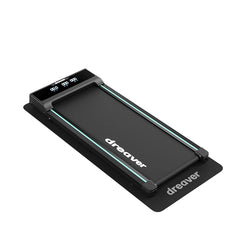
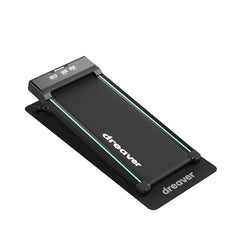
If you work a lot at home, a compact walking pad under a standing desk is a logical choice. A speed of up to about 6 kilometers per hour is then more than enough. More important are a low noise level, a flat design, and a smooth, even run. A handle or armrest is often not necessary in this situation and can even get in the way.
Building fitness and training at a relaxed pace
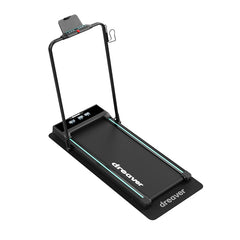
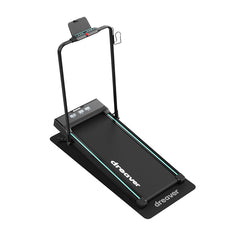
If you want to jog or do interval training occasionally in addition to walking, you will need more. Think of a higher top speed, a slightly longer running surface, and a bar you can hold on to. A motor with sufficient power ensures that the belt does not stall with every step.
Losing weight and more challenge
For those who want to lose weight or increase the intensity without going running, an incline function is interesting. Walking on an incline demands more from your muscles and your heart, while the strain on your joints remains limited. An automatically adjustable incline is convenient, because you can change it while walking without stepping off.
How much space do you have available?
A treadmill always takes up space, even if it is compact. It pays to think carefully about this beforehand.
Measure the place where the treadmill will go
Measure not only the floor, but also the space around it. Behind the treadmill, you preferably keep at least one meter free, so that you can step off safely if necessary. A little extra space on the sides is also convenient. If the treadmill is under a desk, check whether the height of the desk still works when you stand on the belt. After all, you stand a few centimeters higher than normal.
Storing after use
Many people choose a model that can be stored under the sofa or bed after use. That works well, but only if the space underneath is high enough. Measure this beforehand, because a few centimeters really make a difference here. Also pay attention to the weight. Wheels on the front make it much easier to move. And check in the manual whether the treadmill can stand upright. For some models, this is precisely not the intention, because the connection or the motor is not designed for it.
Motor, speed, and incline
The motor is the heart of the treadmill. For a treadmill at home, it is mainly about a motor that runs smoothly and evenly, even during prolonged use. A motor that is too weak will heat up faster and start stuttering sooner, especially if someone with a bit more weight walks on it.
In addition, look at the speed range. For walking, a range up to about 6 kilometers per hour is sufficient. If you also want to jog, a top speed of 10 to 12 kilometers per hour is nice. This way, the treadmill grows with you as your fitness improves.
An incline function is not a must, but it is a valuable addition if you are looking for more challenge. Some models go up to 10 or even 12 percent. That already feels like a brisk walk uphill. Anyone who is torn between different models can use an overview of a treadmill for home to compare well how speed, incline, and size relate to each other.
Running surface and cushioning
The running surface determines how comfortably you walk. A narrow or short running surface feels limited, especially at a higher pace. For walking, a running surface of about 40 centimeters wide and 100 to 120 centimeters long is usually comfortable. Tall people or those who want to jog benefit from a little more length.
Cushioning is just as important. A well-cushioned running surface absorbs some of the shocks that would otherwise end up in your ankles, knees, and hips. That makes a difference especially if you use the treadmill daily and for longer periods at a time. Cushioning is also pleasant for the neighbors, because fewer vibrations pass through to the floor.
Noise in the house
You will use a treadmill that makes a lot of noise less willingly. Especially in an apartment, during a video call, or in the evening when the children are asleep. The noise comes from two sources: the motor and the impact of your feet on the belt.
A quiet motor and good cushioning both help. The surface underneath also plays a role. On a hard floor, every step sounds louder than on a floor with a cushioning layer underneath. If you want to know more about what you can expect in practice, you can read in the article about how quiet a walking pad really is more about noise levels and what they mean.
Weight capacity and sturdiness
Every treadmill has a maximum weight capacity. Preferably choose a model whose maximum is well above your own weight. If you are close to that, the motor will work harder and parts will wear out faster. A weight capacity of up to about 135 kilos gives most people enough margin.
Also pay attention to how sturdy the frame feels. A treadmill that wobbles or creaks gives little confidence. Therefore, read the experiences of other users. They often say more about sturdiness in daily use than a product description.
Operation, app, and extra features
The easier the operation, the more often you will use the treadmill. A remote control, clear buttons, or an easy-to-use app make the difference between stepping on for a bit and dreading it.
An app often offers more than just operation. You can keep track of your steps, distance, and time, follow training programs, and see your progress. For many people, that is motivating. Linking with, for example, Apple Health or other health apps is convenient if you already track your movement with a smartwatch or phone. If you want to use the app to keep going, the article about using the Dreaver App as an accountability partner provides practical tips for that.
Safety and surface
A few simple measures make training at home much safer. Place the treadmill on a flat, stable surface. Keep cords out of the walking path and make sure children and pets cannot get near the belt when it is on. Many treadmills have a safety key or automatic stop function. Use that too.
A mat under the treadmill is also a sensible choice. It protects your floor from scratches and pressure marks, absorbs vibrations, and keeps dust away from the motor. A special protective mat for under the treadmill is made for this and fits the dimensions of a compact treadmill.
Maintenance that extends the lifespan
A treadmill requires little maintenance, but doing absolutely nothing is not a good idea. The belt and the running deck rub against each other with every step. Without lubrication, that friction increases, making the motor work harder and the belt wear out faster.
That is why you lubricate the belt regularly with silicone oil. How often that is necessary depends on how intensively you use the treadmill. The manual usually provides a guideline. Always use oil for the treadmill that is intended for that. Other types of oil can actually damage the belt.
Furthermore, it helps to occasionally take the belt off, check whether it still runs straight, and remove dust around the motor cover. That takes a few minutes and prevents a lot of inconvenience.
Warranty, service, and trial period
A treadmill is a purchase you want to enjoy for years. Therefore, also look at what happens if something goes wrong. How long is the warranty? Is customer service easily reachable? And can you try out the treadmill at home?
A trial period is especially valuable because you only really notice at home how a treadmill suits you. How does it sound in your living room? Does it fit under your desk? Do you use it in practice as often as you thought? With a period to test and possibly return it, you largely remove that uncertainty.
This is how you make a well-considered choice
Anyone considering buying a treadmill should start with their own daily life. Where will the treadmill be placed? When will you use it? Do you mainly want to walk, or also jog and walk on an incline? With those answers in mind, you can focus on size, motor, noise, and extra features.
The best model is not necessarily the model with the most features. It is the treadmill that fits so well in your home and your routine that stepping on it happens automatically. Then exercise does not become an extra task, but something that simply belongs in your day.