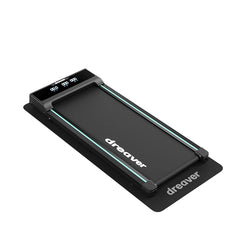
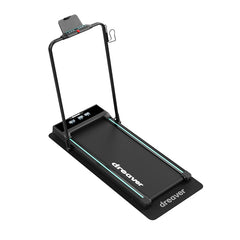
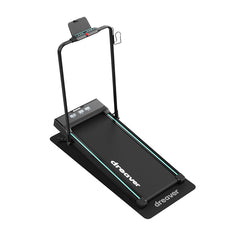
Want to burn more calories without immediately engaging in intense exercise? Walking is one of the simplest and most effective ways to do that. You can do it anywhere, anytime, and even at home on a treadmill. With a bit of structure, you can quickly burn hundreds of extra calories per day without it feeling like exercise.
Why walking is so effective for fat burning
>Walking is an accessible form of exercise that raises your heart rate without overloading your muscles. Moreover, you burn fat instead of sugars when you walk at a moderate pace. This makes it ideal if you want to lose weight or simply become more active.
On average, you burn about this much while walking:
Speed |
Calories per hour (average) |
|
4 km/h |
± 150 kcal |
|
5.5 km/h |
± 300 kcal |
|
5.5 km/h + incline |
± 400 kcal |
You don’t have to walk for full hours to see results. By walking twice a day for 20 to 30 minutes (for example, in the morning and evening), you already achieve a comparable effect. Put on a series, call a friend, or listen to a podcast, and you won’t even notice you’re moving.
Factors that determine how many calories you burn
Not everyone burns the same number of calories while walking. There are various factors that play a role in your total energy expenditure:
1. Your weight
The heavier you are, the more energy your body uses to move. Someone weighing 80 kilos burns on average 250–300 calories per hour at 5 km/h, while someone weighing 60 kilos burns about 200–220 calories.
2. Your pace
Slow walking (3–4 km/h) burns fewer calories than brisk walking (5.5–6 km/h). So try to find a pace where you can still talk but feel that you are moving.
3. The surface or incline
Walking on an incline, for example on a Dreaver treadmill with incline function, activates extra muscles in your legs and buttocks. This raises your heart rate and burns more calories.
4. The surface or incline
The longer you walk, the greater the total burn. Even though a short 10-minute walk seems little, all the small pieces add up at the end of the day.
5. Your metabolism
Everyone has a different resting metabolism. Age, gender, and muscle mass play a role in this. By exercising regularly, you increase this metabolism in the long term, which means you burn more calories even at rest.
Walking vs. running: which is better for fat burning?
Running burns more calories per minute than walking, but it is also harder on your joints and more difficult to maintain daily.
Walking, on the other hand, can be done every day, often without risk of injury. Moreover, your body uses a higher percentage of fat as an energy source when walking, while running uses more sugars. Therefore, walking is an excellent choice for sustainable fat burning, especially when combined with a healthy diet.
Want to get the most out of your walking routine? Then try to vary your pace and incline regularly, or use the interval function of your treadmill.

Play with pace and incline for more results
Want to burn more calories while walking? Then regularly change your pace or add an incline. This raises your heart rate and activates your fat burning even more. On a treadmill, you can easily set and alternate this.
Example of an interval walk (30 minutes):
- 0–5 min: warm up gently (4 km/h)
- 5–10 min: speed up (5.5 km/h)
- 10–25 min: add incline or increase pace
- 25–30 min: cool down slowly
By adding variety, it remains not only effective but also fun to maintain.
Walking for beginners: how to build up gradually
If you are just starting, it is important not to rush. Begin with short walks of 15–20 minutes and gradually increase to 30–45 minutes per day. The most important thing is to keep it up.
A few tips to get started easily:
- Walk at fixed times of the day (such as after meals).
- Wear comfortable shoes and loose clothing.
- Use a pedometer or smartwatch for extra motivation.
- Alternate walking on a treadmill with outdoor walks for variety.
This way, walking becomes a habit instead of an obligation.
Make walking a lasting habit
The key to success is consistency. Better to walk for half an hour every day than to do an intense workout once a week. By sticking with it, you will notice differences not only in weight but also in energy and mood. If you burn an average of 400 extra calories per day, that adds up to about 12,000 calories per month. That equals approximately 1.8 kilos of fat loss per month. Simply by walking more. Combine that with a balanced diet and the results will follow naturally.