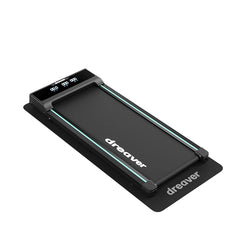
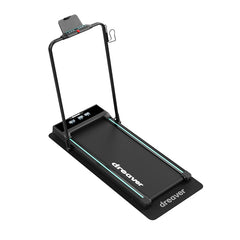
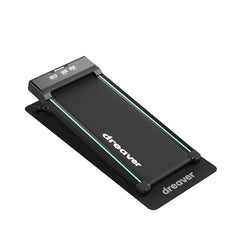
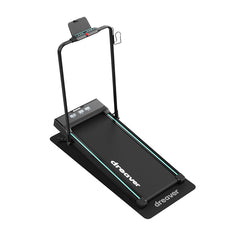
For brisk walking on a treadmill, an incline of 4 to 8 percent is a good choice for most people. Beginners are best off starting at 2 to 4 percent, while advanced users can increase it to 10 percent or more. Always combine the incline with a suitable speed for safe and effective results. Brisk walking on a treadmill sounds simple, but as soon as you start playing with the incline, the workout changes completely. Your heart rate rises, your glutes work harder, and suddenly walking at 5 km/h feels a lot more challenging than you are used to. That is exactly the point. Yet many people do not know where to start. What incline is realistic? When will you notice the effect? And how do you build up safely without overstressing your body? This article gives you clear answers, with practical examples for different levels. Anyone who is just starting with treadmill training or wants to make the workout more intense will know exactly how to coordinate incline and speed after reading this article.
What is the difference between walking without an incline and walking with an incline?
On a flat treadmill (0 percent incline), you move your legs forward without any noticeable resistance from the surface. It is like walking on a well-paved road, which is functional but not very challenging for your fitness. If you want to buy a treadmill for home, it may therefore be interesting to choose a model with an adjustable incline.
As soon as you increase the incline, muscle activation changes significantly. Your calves, hamstrings, and glutes work harder to push your body upward. Your heart rate rises, your breathing deepens, and you burn more energy, even at the same speed. Research shows that walking at a 5 percent incline can increase energy expenditure by 20 to 30 percent compared to walking on a flat surface.
Another advantage is that walking with an incline better mimics walking outdoors. On a flat treadmill, the movement lacks some of the natural resistance you experience outdoors. A slight incline of 1 to 2 percent already largely compensates for that difference. In addition, make sure to maintain the machine properly, for example by using treadmill oil if necessary to keep the belt moving smoothly.
At what incline do you notice the effect during brisk walking?
That depends on your fitness level, but the following general guidelines apply:
- 0 to 1%: Barely noticeable, good for a warm-up or recovery walk.
- 2 to 4%: You notice extra effort, but the pace remains comfortable, making it suitable for beginners who want to build up.
- 5 to 8%: Clearly harder, with your heart rate noticeably rising and your glutes working significantly harder in the zone for recreational walkers who want to intensify their workout.
- 9 to 12%: Hard and targeted, not immediately achievable for everyone, but effective for people with a good basic fitness level.
- Above 12%: Intense and stressful for the joints and lower back, only suitable with a built-up fitness level and good technique.
For most people, the effect of the incline is noticeable from 3 to 4 percent. At that point, walking at 4 to 5 km/h requires more effort than you are used to on a flat surface.
Which combination of speed and incline suits your level?
The combination of speed and incline determines how hard a workout feels. Here are practical examples for each level:
Beginners: build up slowly with a slight incline
Those who have just started treadmill training or have been inactive for a while should start conservatively. An incline that is too high at the beginning puts unnecessary strain on your Achilles tendons, calves, and knees.
- Speed: 3.5 to 4.5 km/h
- Incline: 1 to 3%
- Duration: 20 to 30 minutes, 3 times a week
Train at this level for two to three weeks before increasing the incline. Listen to your body: if you have excessive muscle pain after the workout or your joints feel stressed, that is a signal to slow down the progression.
Recreational walkers: brisk walking with noticeable effort
Those who have already built up a basic fitness level and want to make the workout more challenging should use the following guidelines:
- Speed: 4.5 to 5.5 km/h
- Incline: 4 to 7%
- Duration: 30 to 45 minutes
At this level, brisk walking feels like a significant effort. You can still hold a conversation, but no longer effortlessly. That is the sign that you are in an effective training zone.
Advanced walkers: intensive training with a high incline
For people with a good fitness level who want to take their cardio training to the next level:
- Speed: 5 to 6.5 km/h
- Incline: 8 to 12%
- Duration: 30 to 50 minutes
Note: the higher the incline, the greater the risk of overstressing the Achilles tendon and lower back if your technique or progression is not correct. Never increase the incline by more than 1 to 2 percent per week.
How do you safely build up a treadmill workout with an incline?
A good progression always starts with a warm-up. Do not step directly onto an 8 percent incline if your body is still cold. Use the first five minutes to prepare your muscles and joints.
An example of a safe progression structure:
- Warm-up (5 minutes): 4 km/h, 0 to 1% incline
- Main workout (20 to 40 minutes): gradually increase to your target incline
- Cool-down (5 minutes): back down to 3.5 km/h, 0% incline
Preferably increase the incline step by step during the workout, not all at once. This gives your body time to adapt and reduces the risk of injuries.
A handy rule of thumb is that when you have difficulty speaking a full sentence while walking, the load is probably too high for a walking workout. Adjust your incline or speed.
What should you pay attention to when walking at a higher incline?
A high incline not only increases the effort but also affects your posture and technique. Avoid the tendency to hold onto the handrails to pull yourself up. This significantly reduces the training effect and can overstress your wrist and shoulder joints.
Keep your body leaning slightly forward from the ankles instead of the hips, and make sure your arms move actively along with you. Look forward, not down. Your stride will naturally become shorter at a higher incline, which is normal and even desirable.
People with knee problems, back complaints, or Achilles tendon issues should keep the incline low or consult a physical therapist before training more intensely.
How do you adjust the incline if you want to lose weight or improve your fitness?
The goal of your workout partly determines how you use the incline:
- For higher energy expenditure: Walk for 30 to 45 minutes at a moderate incline of 4 to 6 percent and a comfortable speed at which your heart rate is at 60 to 70 percent of your maximum heart rate. Prolonged effort at a moderate intensity can contribute to higher energy expenditure.
- For fitness improvement: Alternate between higher inclines of 7 to 10 percent for short intervals and lower inclines for recovery periods. This increases your cardiovascular load and can improve your endurance faster.
- For muscle strength in your legs and glutes: Choose a higher incline of 8 to 12 percent at a lower speed. This strongly stimulates muscle activation without putting too much strain on your heart and lungs.
Ready to take your treadmill training to the next level?
Walking on a treadmill does not have to be boring or predictable. By consciously playing with the incline and speed, you turn every workout into a targeted session that suits your goals and level.
Start low, build up gradually, and listen to your body. An incline of 4 to 6 percent is a good starting point for brisk walking for most recreational walkers. Once you are used to that load, you will notice that a higher incline gives the workout the extra challenge it needs.
The beauty of treadmill training is the control: you determine the pace, you determine the incline. Use that control wisely.